
Let’s be honest about the sushi buffet experience for a second.
You’ve been there. Everyone has. The sneeze guard, the tray of California rolls that’s been sitting out since the lunch rush, the “fresh” salmon that’s doing its best under heat lamps that were never designed for raw fish. You grab a plate, you tell yourself it’s fine, and somewhere around roll number eight you start questioning your decisions.
Sushi buffets in miami exist on a spectrum. Some of them are exactly what they advertise: a lot of food for one price, quantity as the whole point. Some of them are something else pretending to be a deal. The difference matters, and this is the honest version of that conversation.
The Buffet Economics and What They Mean
Every restaurant is running math. The buffet model runs a very specific version of it.
Buffet dining works economically when volume compensates for margin. The per-item cost has to stay low enough that even a table that eats twice what they should still leaves the restaurant profitable. That math has consequences for what ends up in the trays.
High-quality fish is expensive. Premium sourcing, proper handling, daily delivery: these costs don’t disappear because the format is all-inclusive. They get absorbed somewhere. Usually in the grade of fish, the frequency of replacement, or the preparation technique. A buffet that’s serving the same quality as a serious à la carte kitchen at the same price point is either losing money or found a loophole that doesn’t exist.
This isn’t a judgment on the format. It’s economics. All you can eat sushi works when both sides of the transaction are honest about what it is: a quantity proposition, not a quality one. The problem is when the marketing doesn’t match the model.
Freshness Questions in Sushi Buffets in Miami
Fresh sushi and buffet sushi have a complicated relationship.
Raw fish has a window. Once cut and plated, that window starts closing. In an à la carte kitchen, the piece goes from prep to plate to customer in a controlled sequence. In a buffet sushi format, the piece goes from prep to tray to however long it takes for someone to walk by and pick it up. That gap is variable and uncontrollable.
A well-run all inclusive sushi buffet manages this by rotating trays frequently, maintaining proper temperature, and not over-producing. The operational discipline required to do this at scale while keeping prices accessible is genuinely hard. Some places do it. More places attempt it with varying results.
The tell is the rice. Sushi rice held too long in a buffet environment loses temperature, dries at the edges, and changes texture in ways that affect the entire piece. If the rice is wrong at a value option buffet, everything built on it is also wrong. That’s not pessimism. That’s just how rice works.
Value Calculation for Different Appetites
Here’s where the buffet model has a legitimate argument.
If you eat a lot, the math can genuinely work in your favor. Twenty-five dollars all-in versus ordering à la carte at a serious restaurant, where the same volume of food might run fifty to sixty: the savings are real if quantity is what you’re optimizing for.
The quantity option calculation makes most sense for: teenagers who eat volumes that defy explanation, situations where the goal is maximum food for minimum spend, casual group meals where everyone just wants to eat without worrying about the check.
It makes less sense for: date nights, special occasions, anyone who’s going to be honest with themselves about the quality difference, situations where you want to actually taste what you’re eating rather than eat as much of it as possible.
The honest version of buffet dining value is that you’re trading quality ceiling for quantity floor. You’ll never leave hungry. You might leave wishing you’d gone somewhere else. Whether that trade is worth it depends entirely on what you came for. And also, asking friends for recommendations can never go wrong, head to Sushi recommendations in Miami: What people actually tell their friends to know more.
Menu Limitations vs. À la Carte
Sushi buffet menus are, by design, conservative.
The dishes that appear in a buffet format are the ones that can be prepared in volume, held safely, and replaced quickly. That eliminates most of the interesting stuff. The Latin-Japanese fusion dishes, the preparations that require fresh assembly, the rolls built around daily sourcing: these don’t survive the buffet format intact.
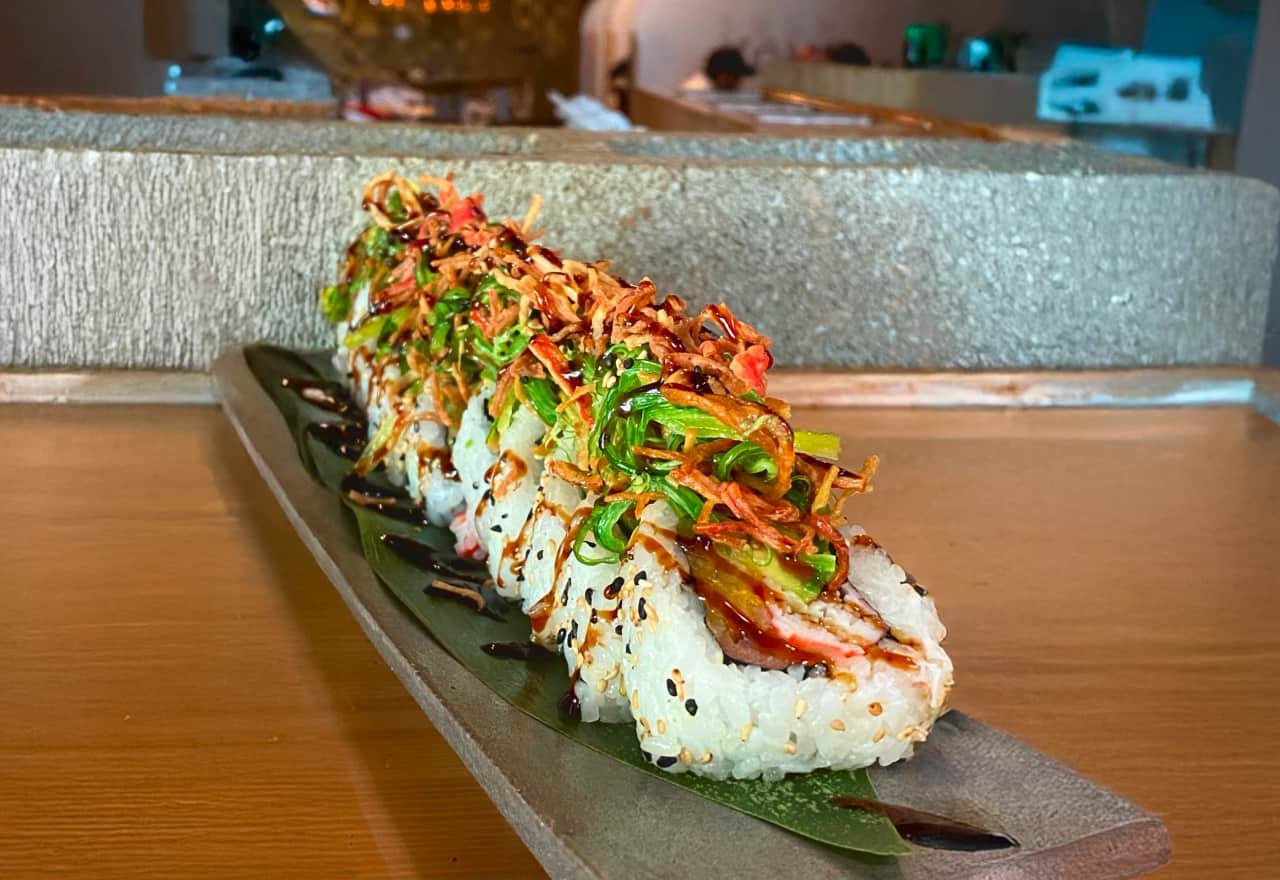
The PataKONG (fried sweet plantain cup, sushi rice, krab salad, salmon, passion fruit, cream cheese) doesn’t exist in a buffet because the plantain cup loses its structure within minutes. The Sushi Pizza (tempura rice bun, smoked salmon, sweet plantain, melted raclette, passion fruit glaze) isn’t a buffet dish because the raclette sets, the crispy base softens, and by the time someone picks it up it’s a different dish than what was intended.
À la carte menus exist because some food can’t wait. The Chocolate Kamikaze (chocolate ice cream bar, warm fondant, homemade Nutella) is served immediately because it’s a temperature composition that stops being itself in about four minutes. That’s not a buffet dish. That’s a dish designed around the moment it arrives. Sushi menu reading in Miami is a true art form, head to our blog to find out more!
The full menu at Sushi KONG is built around this logic. Every dish is designed for immediate consumption because that’s when it’s best. The buffet model is structurally incompatible with that standard, not because buffets are bad, but because the formats have different goals.
When Sushi Buffets in Miami Actually Deliver
Okay, fair is fair. The all you can eat format has moments where it genuinely makes sense.
Large, casual family gatherings where the adults want sushi and the kids want chicken teriyaki and someone’s abuela needs something recognizable: the buffet handles this with zero negotiation. Everyone finds something, nobody has to coordinate, the check is predictable. That’s a real use case and it has value.
Budget meals for a group of people who want volume without discussion: also legitimate. Sometimes the goal is just feeding people efficiently, and the buffet does that better than any other format.
Post-gym, genuinely-need-to-eat-a-lot situations: buffet math works. No further explanation needed. We’ve all been there. We respect it.
The moments where buffets don’t deliver are the ones where quality was the actual goal and the format couldn’t support it. That’s the mismatch worth avoiding, and it’s avoidable with five seconds of honest self-assessment about what you actually want from the meal.
If the answer is quality, an intentional à la carte order at a serious kitchen beats the buffet every time, even at a higher per-item cost. As covered in the affordable sushi guide, the smart budget order at a good restaurant often lands at a price point that’s more competitive with buffet pricing than people expect, and the food is categorically different.
Skip the buffet when quality is the point. Check the menu and build an order that actually delivers. Your taste buds have been through enough.
