
“Cheap sushi” is either the best sentence in the English language or a warning sign. Depends entirely on where it’s coming from.
Searching cheap sushi near me is not a character flaw. It’s Tuesday, you have a budget, and you want something good. Completely reasonable. The question isn’t whether affordable sushi exists. It’s whether the affordable version is actually worth eating or just technically food that arrived in a box.
That distinction matters more with sushi than with almost any other cuisine. And here’s why.
How Restaurants Offer Lower Prices
Every restaurant that offers affordable sushi is making a set of choices to get there. The math always has to work somewhere.
Lower prices come from one of three places: volume, efficiency, or cuts. Volume means the restaurant moves enough food that margins work at lower price points. Efficiency means the kitchen is smart about prep, ordering, and waste. Cuts means something got compromised: the fish grade, the rice quality, the portion size, the sourcing standards.
Two of those three are fine. One is not.
A high-volume kitchen that runs efficiently can offer genuinely budget friendly sushi without touching quality. That’s the model worth finding. The lunch special at Sushi KONG (three dishes for $12) exists because the kitchen is built for efficiency and the lunch volume supports it. That’s not charity pricing. That’s smart operations.
The version to avoid is the one where the math works because the fish is older than it should be or the rice was made yesterday or the “fresh” on the menu is doing a lot of creative work. That discount pricing model exists. It’s identifiable if you know what to look for.
Where Savings Come From (And Where They Shouldn’t)
Budget sushi done right saves money in the right places.
Labor efficiency is a legitimate saving. A kitchen that preps well, wastes less, and runs tight can pass that efficiency to the customer. You’re not paying for disorganization.
Menu focus is another legitimate saving. A restaurant with 30 well-executed items runs cheaper than one with 90 mediocre ones. Focused menus mean less inventory, less waste, more expertise per dish. The savings are real and nobody compromised anything to get there.
Atmosphere is also a legitimate saving. You don’t need a chandelier for the hamachi to be good. A clean, well-run space with honest pricing and excellent fish is a better deal than a design-forward room with a 40% markup and fish that’s been sitting since yesterday.
Where savings should never come from: the fish. Non-negotiable. Inexpensive sushi that got there by downgrading the protein is not a deal. It’s a risk you’re taking with your digestive system and your evening. The Hitched Sashimi at Sushi KONG (premium hamachi and tuna cuts) costs what it costs because the sourcing is real. That line doesn’t move.
Rice quality is the other non-negotiable. Good deals on sushi that arrived via bad rice are not good deals. The rice is half the dish. Poorly calibrated rice temperature, wrong acidity, wrong texture: it undermines everything it’s holding. A roll built on compromised rice is not a value sushi situation. It’s just a less good roll at a lower price.
Identifying Real Deals vs. Cheap Shortcuts
You don’t need a culinary degree to tell the difference. Your senses do most of the work.
Color. Fresh fish has a vibrancy to it. Tuna should be a deep, clean red. Salmon should have a bright orange clarity. Hamachi should look almost luminescent. Fish that’s been sitting too long loses that vibrancy. It looks dull. Flat. Like it’s tired. Trust that read.
Smell. A sushi restaurant should smell like the ocean in the best possible way: clean, fresh, oceanic. It should not smell like fish in the way that means something has been there too long. That smell is the restaurant telling you something. Listen to it.
Rice temperature. Sushi rice is meant to be served at just above room temperature, not cold from the fridge. Cold rice means it was made too far in advance and stored. The texture is different, the starch behaves differently, the whole piece suffers. Order one piece early and you’ll know everything you need to know about the kitchen’s standards.
Menu turnover. A sushi specials board that changes regularly signals a kitchen working with what’s fresh and in season. A menu that never changes, with every fascinating item always available at the same price forever, is a menu built on frozen inventory. Not automatically bad. But not what you’re hoping for. If you’re planning an event, head over to sushi for events in Miami, to learn your options.
Affordable Sushi Nearby That Maintains Quality
The smartest affordable sushi move in Miami isn’t finding the cheapest restaurant. It’s finding the right moments at the right restaurant.
Lunch specials are the clearest example. Sushi KONG’s three dishes for $12 lunch special is the same kitchen, the same fish, the same chefs as the dinner service. The price is lower because the window is different, not because anything else changed. That’s the deal worth finding.
Check the full menu before you order. Knowing which dishes deliver the most for the price point means you’re building a smart order instead of spending on autopilot. The Asia Mia Salad (krab, wakame, carrots, salmon, avocado, spicy mayo) as a starter gives you volume and variety at a price that makes sense. The Yakimeshi Beef as an anchor fills the table without filling the check.
Delivery also unlocks value that doesn’t always exist in the dining room. No parking, no tip on top of a cocktail order, eating at home where the drinks are already paid for. If the goal is cheap sushi that’s actually good, a well-constructed delivery order hits that target more reliably than a rushed dine-in during peak hours. Looking for sushi buffets in Miami? Follow the link to become and expert.
Building Smart Budget Orders
The formula for a budget friendly sushi order that doesn’t feel like a compromise:
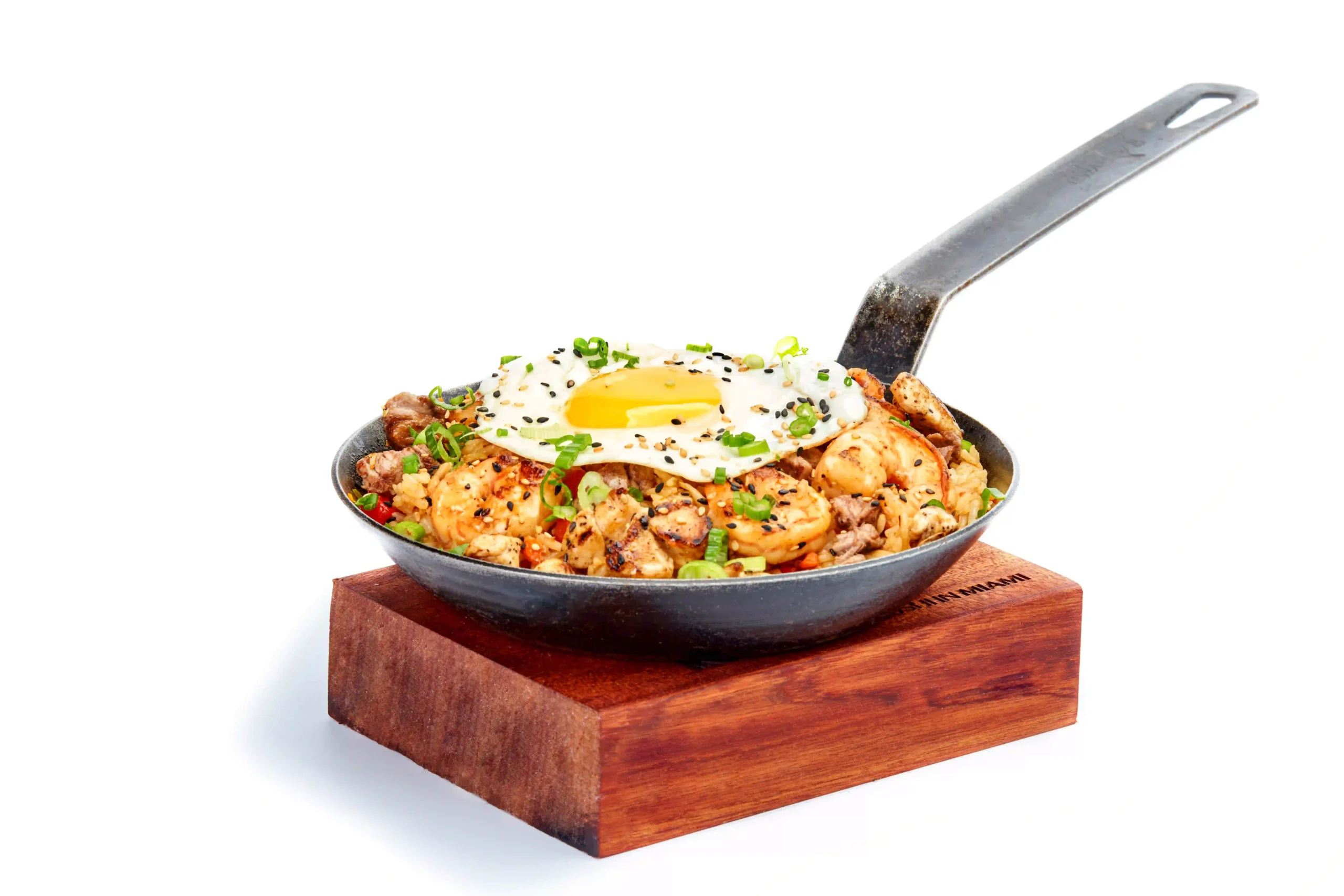
One anchor dish that delivers volume. The KING Yakimeshi (three proteins, fried egg, stir-fried rice) feeds two people as a shared base and costs significantly less per bite than a full roll order would.
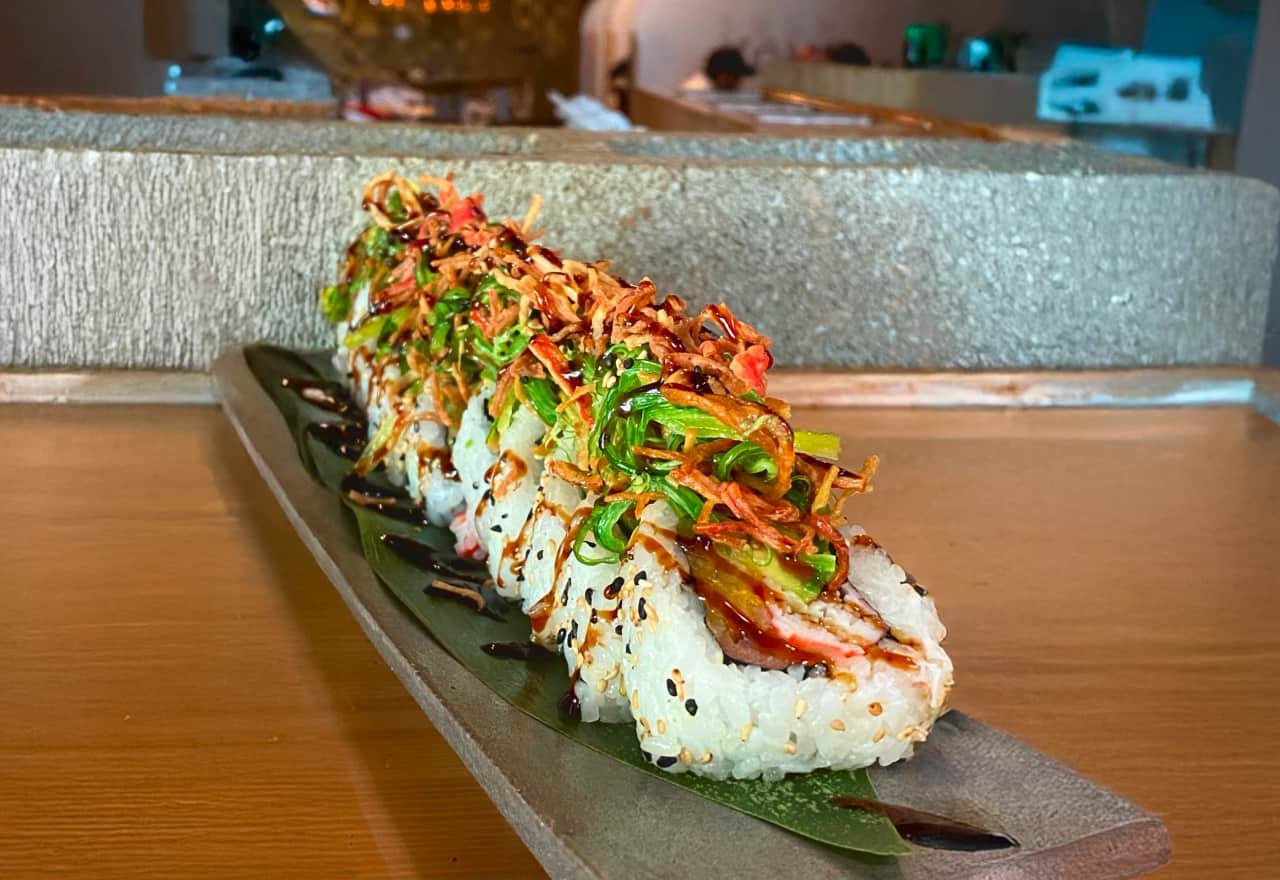
One signature roll that represents the kitchen well. Not the most expensive one, not the cheapest one. The one that shows what the kitchen actually does. At Sushi KONG, the Havana 305 (smoked salmon, sweet plantain, avocado, seaweed salad) does this job. It’s distinctive, it’s built with intention, and it won’t drain the budget.
One starter to open the meal. The lunch special format, three dishes for $12, handles this built-in. Outside of that window, the Coco Loco ceviche (white fish, coconut rum, tostones) is the opener that punches above its price point every time.

Skip the premium additions if the budget is tight. Extra sauces, specialty upgrades, the most expensive nigiri on the list: save those for when you’re not optimizing. The core menu at Sushi KONG is strong enough that the budget version of the order is still a legitimately good meal.
Cheap sushi that’s actually worth eating exists. It’s just not the cheapest sushi. It’s the smartest order at a kitchen that doesn’t cut where it counts.
Get real sushi without premium prices. Check the menu and build your order here.
