
Most people think a sushi tasting menu Miami is just a fixed list of dishes someone picked for you.
It’s not. Or it shouldn’t be.
A real tasting menu is an argument. A point of view on how flavor should kind of move across an evening. Every course exists in relationship to the one before it and the one after. Nothing is random, even when it feels effortless. Especially when it feels effortless.
Miami diners are ready for this conversation. The city’s food scene has matured past “vibe first, food second.” The best tables here now deliver both, and the tasting experience is where that ambition makes an appearence.
Here’s how to read what a good sequence is actually doing.
The Sequence: Why Order Matters
Eat a rich, fatty toro at the start of a meal and everything after it tastes flat. Eat it in the middle of a menu progression, after your palate has been properly opened, and it lands like a revelation.
Sequence is not decoration. It’s the architecture of the entire experience.
A well-designed curated menu moves the diner through a deliberate arc: opening, build, peak, resolution. Same structure as a good story, a good song, a good conversation. The parallels aren’t coincidental. The people who design these menus think about it exactly that way.
At Sushi KONG, that arc starts with intention. The Coco Loco (white fish ceviche, coconut rum, coconut milk, arepitas or tostones) as an opener doesn’t just taste good. It functions. Bright acidity, light protein, tropical citrus that wakes the palate up without overwhelming it. You’re ready now. The kitchen knows that and builds from there.

Every course after it should feel like a logical next step. Not predictable. Logical. There’s a difference. Predictable is boring. Logical is satisfying. If you want to dig deeper, head to our article: Sushi Dining Experience in Miami: What Excellence Looks Like.
Light to Rich: How Palates Progress
The classic progression flow in any serious tasting format moves from light to rich. This isn’t arbitrary tradition. It’s physiology.
Fat coats the palate. Once it’s there, it takes time and acidity to clear it. Start rich and everything that follows has to fight through that coating to register. Start clean and each course lands on an open, receptive palate ready to taste fully.
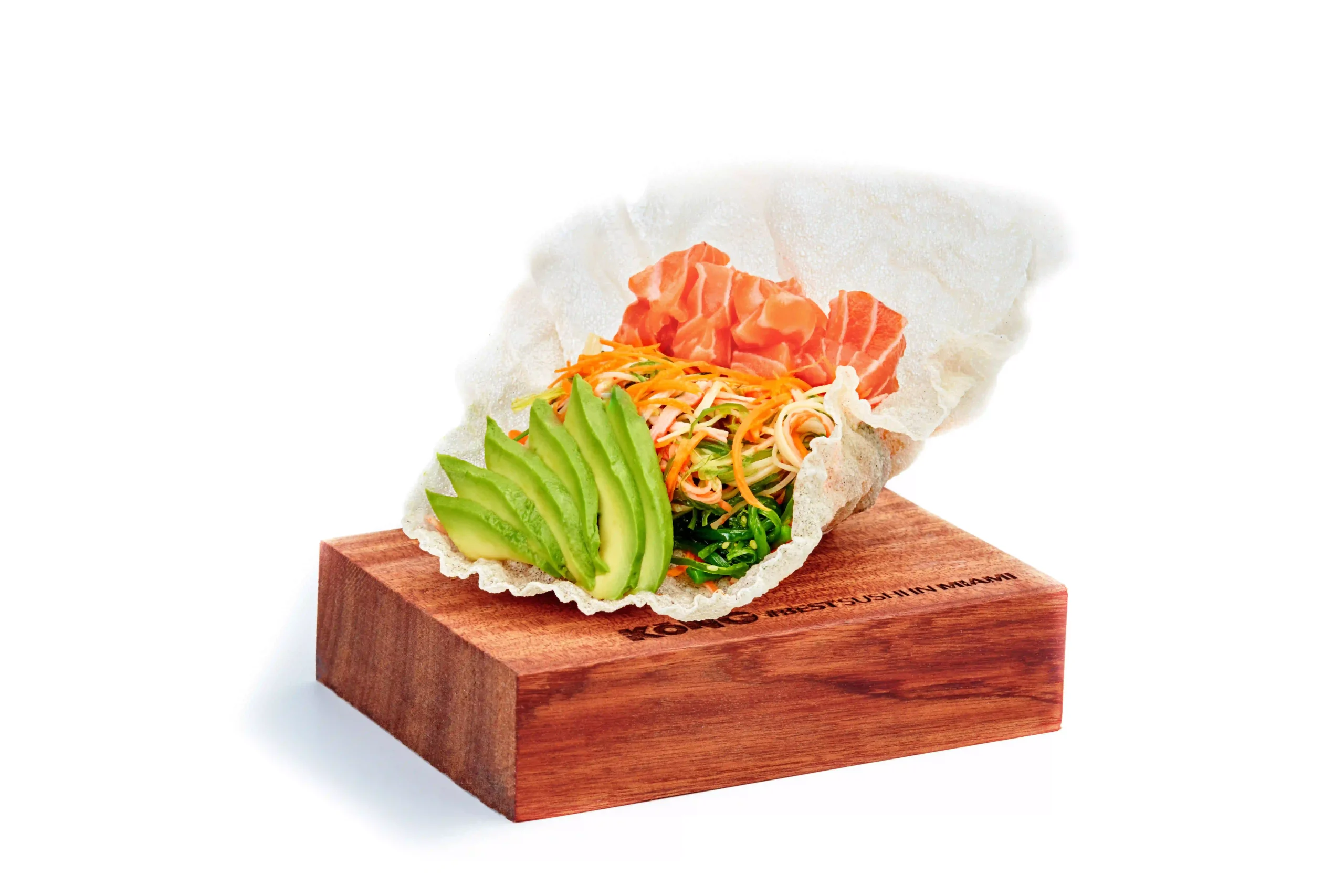
This is why the Asia Mia Salad (krab, wakame, carrots, salmon, avocado, spicy mayo, sesame dressing) works beautifully as an early course. It’s complete and satisfying without loading the palate. It says “this kitchen knows what it’s doing” before the more complex courses arrive to prove it.
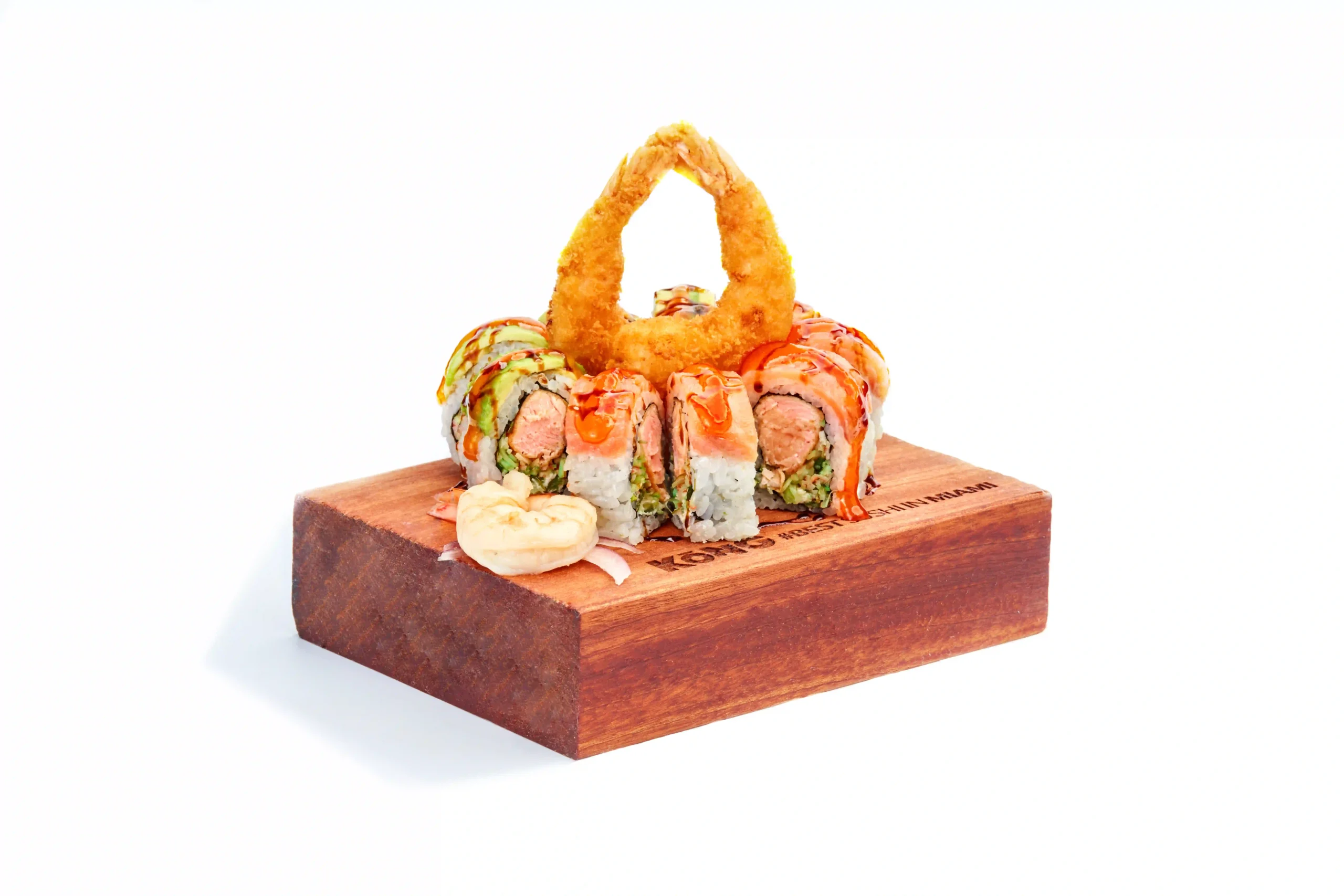
The multi course build toward richness also creates emotional momentum. When the Romeo & Juliet roll (crispy salmon, krab salad, cream cheese, smoked salmon, avocado, shrimp tempura, shrimp ceviche on top) arrives after lighter courses, the richness reads as reward. It earns its place in the sequence. Eat it first and it’s just a good roll. Eat it at the right moment and it’s the peak of an evening.
That’s the difference between a list of dishes and a dining arc.
Temperature Progression Through the Menu
Temperature is the variable most diners don’t consciously notice but immediately feel.
A chef’s menu that alternates between cold and warm isn’t doing it for variety’s sake. Temperature changes reset the palate in ways that purely flavor-based transitions can’t. Cold raw fish sharpens focus. A warm wok dish relaxes the body. That alternation keeps the diner present across a long meal in a way that all-cold or all-warm sequences don’t.
The Yakimeshi (stir-fried rice, soy sauce, sesame oil, fried egg) arriving mid-sequence isn’t just comfort food placed randomly in a set menu. It’s a thermal reset. The warmth opens the appetite back up right before the next cold course, which then lands with renewed clarity.
The best sequences feel like breathing. Inhale, exhale. Cold, warm. Tension, release. You don’t notice it analytically while it’s happening. You just feel relaxed and hungry again in cycles, which is exactly the intended effect.
Sushi KONG’s kitchen builds with this in mind. The wok dishes and the raw preparations aren’t competing menus layered on top of each other. They’re in conversation, taking turns carrying the meal forward.
Texture Variety and Its Purpose
Taste gets all the attention. Texture does at least half the work.
A sushi tasting menu that only delivers silky and smooth becomes monotonous fast, regardless of how good each individual piece is. The palate needs contrast. Crispy against soft. Dense against delicate. Something that requires a real bite next to something that dissolves immediately.
The Sushi Pizza (tempura rice bun, smoked salmon, sweet plantain, melted raclette, passion fruit glaze, eel sauce) is a texture composition as much as a flavor one. The crunch of the fried rice bun against the silkiness of the raclette and the tenderness of the salmon creates a layered bite where something different is happening at every stage of chewing. That’s not accidental. That’s engineering.
The PataKONG (fried sweet plantain cup, sushi rice, krab salad, salmon, passion fruit, cream cheese) works on the same principle. The plantain cup delivers structural crunch. The filling is creamy and yielding. The result is a bite that’s interesting from start to finish, not just at first contact.
Tasting experience fatigue happens when textures don’t vary. By the third silky piece in a row, the palate starts tuning out. A textural interruption, something crispy, something chewy, something with resistance, reactivates attention. It’s the culinary equivalent of a key change mid-song. You didn’t know you needed it until it happened and suddenly you’re listening again.
Reading the Menu Design
A well-designed sushi tasting menu tells you what the kitchen values before you take a single bite.
Look at the openings. If the first course is already rich and heavy, the kitchen is optimizing for immediate impression, not for the full arc. That’s a choice, not a mistake, but it tells you something about the philosophy.
Look at where the raw fish lands relative to the cooked preparations. A kitchen that understands palate progression doesn’t cluster all the raw courses together and all the cooked courses together. They’re distributed intentionally, each one setting up the next.
Look at the dessert. A curated menu that ends with something thoughtfully calibrated to close the arc, rather than just sweet for the sake of sweet, is a menu designed by someone who cares about the full experience.
At Sushi KONG, the Chocolate Kamikaze (chocolate ice cream bar, warm fondant, homemade Nutella) closes with temperature contrast, textural contrast, and richness calibrated to feel like resolution rather than addition. It doesn’t add another layer to an already full meal. It lands the whole thing. Como debe ser.
The full menu at Sushi KONG is the blueprint. Read it before you come and you’ll see the logic. Come in and eat through it and you’ll feel the logic. Those are two very different and equally valid ways to understand what a kitchen is doing.
For the deepest version of this experience, the omakase format removes the navigation entirely and hands the arc over to the chef. Worth reading about before you decide which approach fits your evening.
Try the tasting menu and feel the progression firsthand. Learn to Upgrade your Sushi Order Without Spening More.
